Luffa Pollen Under the Microscope
Luffa Pollen (Whole Mount), Luffa aegyptiaca
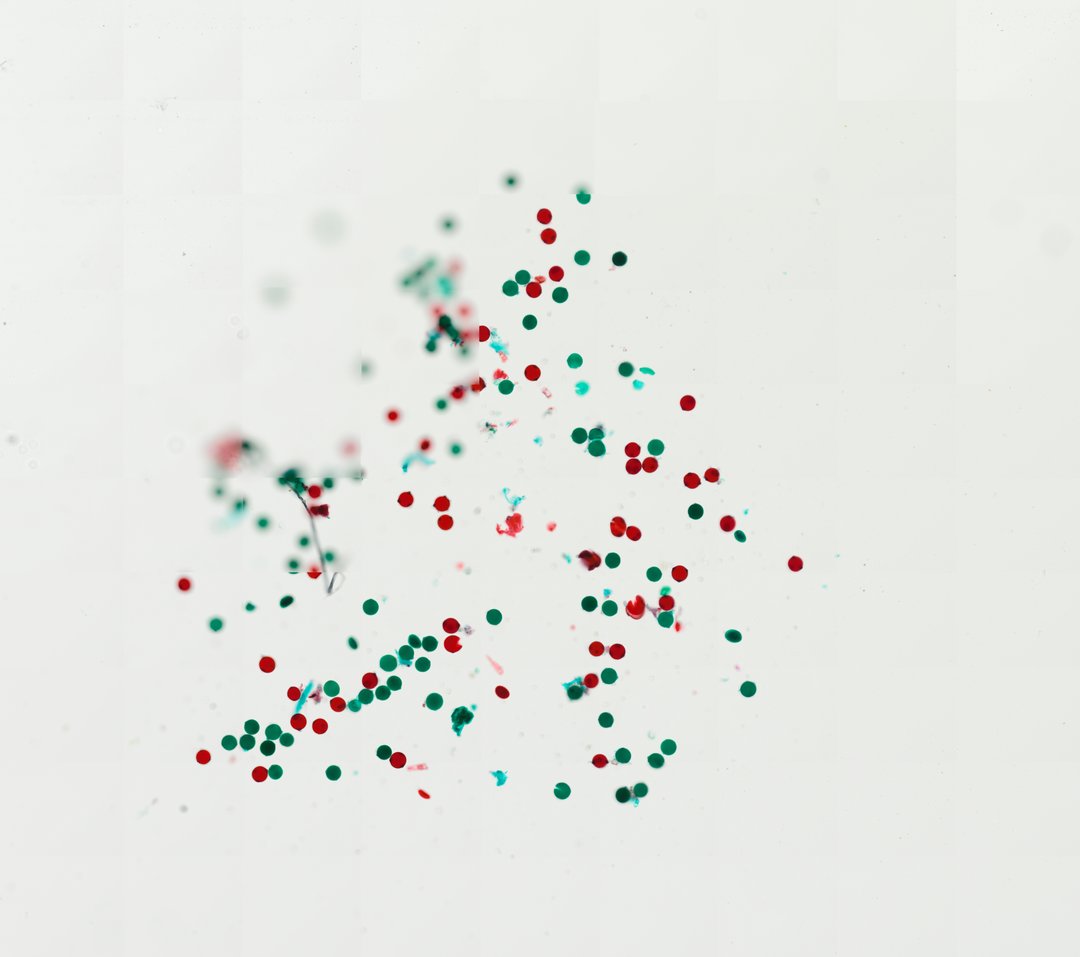
This slide shows pollen grains from Luffa, the plant that makes loofah sponges, stained with safranin and fast green. Luffa pollen is round with three openings, a typical dicot pattern.
This whole mount shows loose pollen grains from luffa (Luffa aegyptiaca), the plant whose dried fruit becomes a luffa sponge. The slide was stained with safranin and Fast Green, and each grain took up mostly one dye, so some grains look red and others green. The grains are large and nearly round, with a tough outer wall. On many red grains, small dark spots mark the pores where a pollen tube can grow out. The shape of pollen and its number of openings help scientists tell plant groups apart.
What to look for
- Pollen grains: Round to nearly round grains scattered across the slide.
- Apertures: Three openings in the wall where a pollen tube can grow out.
- Exine: The thick, tough outer wall.
- Intine and contents: The thinner inner wall and the cell contents inside the grain.
Questions and answers
What does Luffa pollen look like under a microscope?
Luffa pollen grains are round with a thick outer wall and three openings. Double staining makes the tough outer wall stand out from the inner layer and cell contents.
How is dicot pollen different from monocot pollen?
Most monocot pollen, like lily pollen, has a single furrow. Most dicot pollen, like Luffa pollen, has three openings or three furrows.
Compare it
- Category
- Botany & Plants
- Scan magnification
- 20x
- Stain
- Safranin / Fast Green
Viewing this slide in class
This is a scan of a real prepared slide, not a simulation or a drawing. On StudyScope you can pan from the whole slide down to individual structures, always in focus, and measure them in real micrometers with the calibrated ruler. Present it live and every student screen follows your view and annotations. Students join with a room code on Chromebooks, iPads, or any browser, with no accounts.