Lower Epidermis of Tradescantia reflexa Leaf
Lower Epidermis of Tradescantia reflexa Leaf (Whole Mount), Tradescantia reflexa
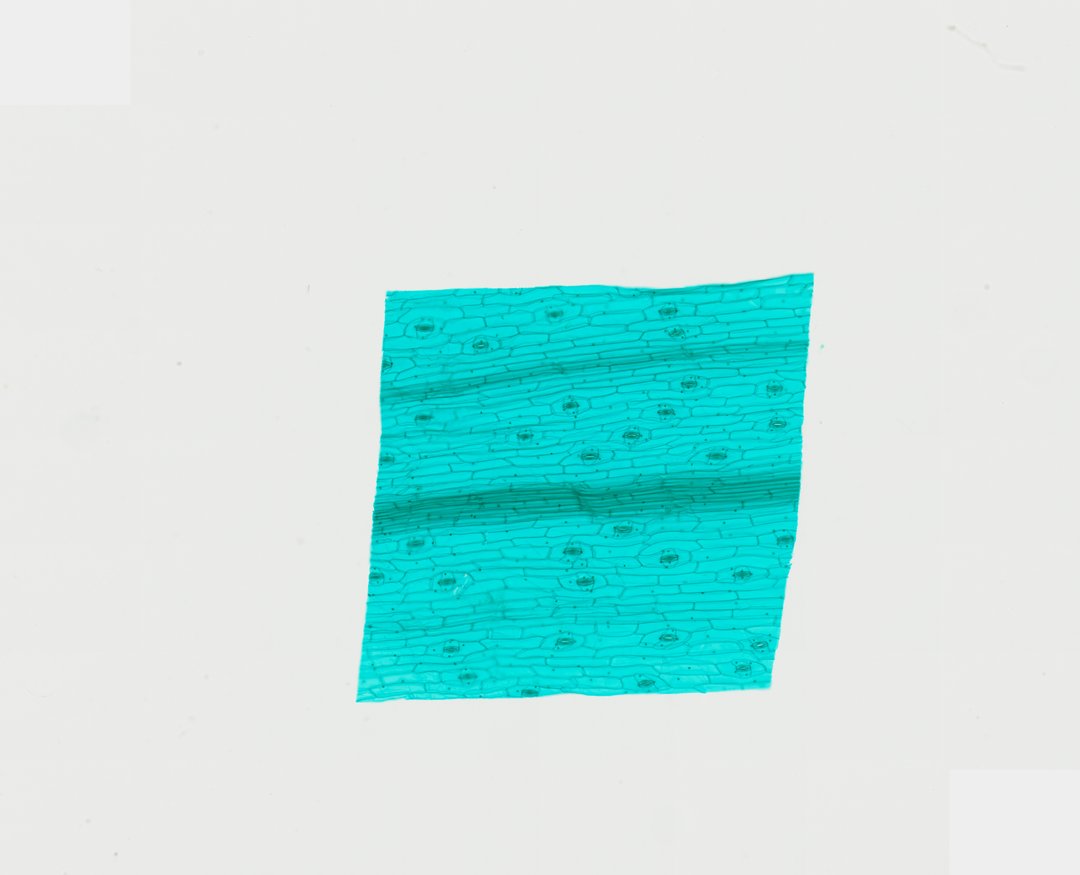
This is a peel of the lower surface of a Tradescantia leaf stained with fast green. Its long, neat rows of cells and stomata with helper cells around them make a nice monocot comparison to bean leaf peels.
This whole mount shows the lower epidermis, the thin outer skin, of a Tradescantia reflexa (spiderwort) leaf. The cells are long rectangles lined up in rows, a pattern typical of monocot leaves. Spread across the surface are stomata, tiny pores that let gases pass in and out. Each pore sits between two guard cells, which open and close it, and is ringed by subsidiary cells, helper cells that look different from their neighbors. Fast Green stain colors the cell walls, making the cell outlines and stomata easy to count and compare.
What to look for
- Pavement cells: Long, rectangular epidermal cells lined up in parallel rows.
- Stomata: Pores spaced across the surface.
- Guard cells: A pair of cells directly around each pore.
- Subsidiary cells: Usually four helper cells surrounding each pair of guard cells.
Questions and answers
What are subsidiary cells?
Subsidiary cells are epidermal cells next to the guard cells that look different from ordinary pavement cells. They help the guard cells open and close the stoma. In Tradescantia there are usually four around each stoma.
How is a Tradescantia leaf peel different from a bean leaf peel?
Tradescantia is a monocot, so its epidermal cells are long rectangles in parallel rows. A bean is a dicot, so its epidermal cells have wavy edges that fit together like puzzle pieces.
Compare it
- Category
- Botany & Plants
- Scan magnification
- 20x
- Stain
- Fast Green
Viewing this slide in class
This is a scan of a real prepared slide, not a simulation or a drawing. On StudyScope you can pan from the whole slide down to individual structures, always in focus, and measure them in real micrometers with the calibrated ruler. Present it live and every student screen follows your view and annotations. Students join with a room code on Chromebooks, iPads, or any browser, with no accounts.