Lily Pollen Under the Microscope
Lily Pollen (Whole Mount), Lilium
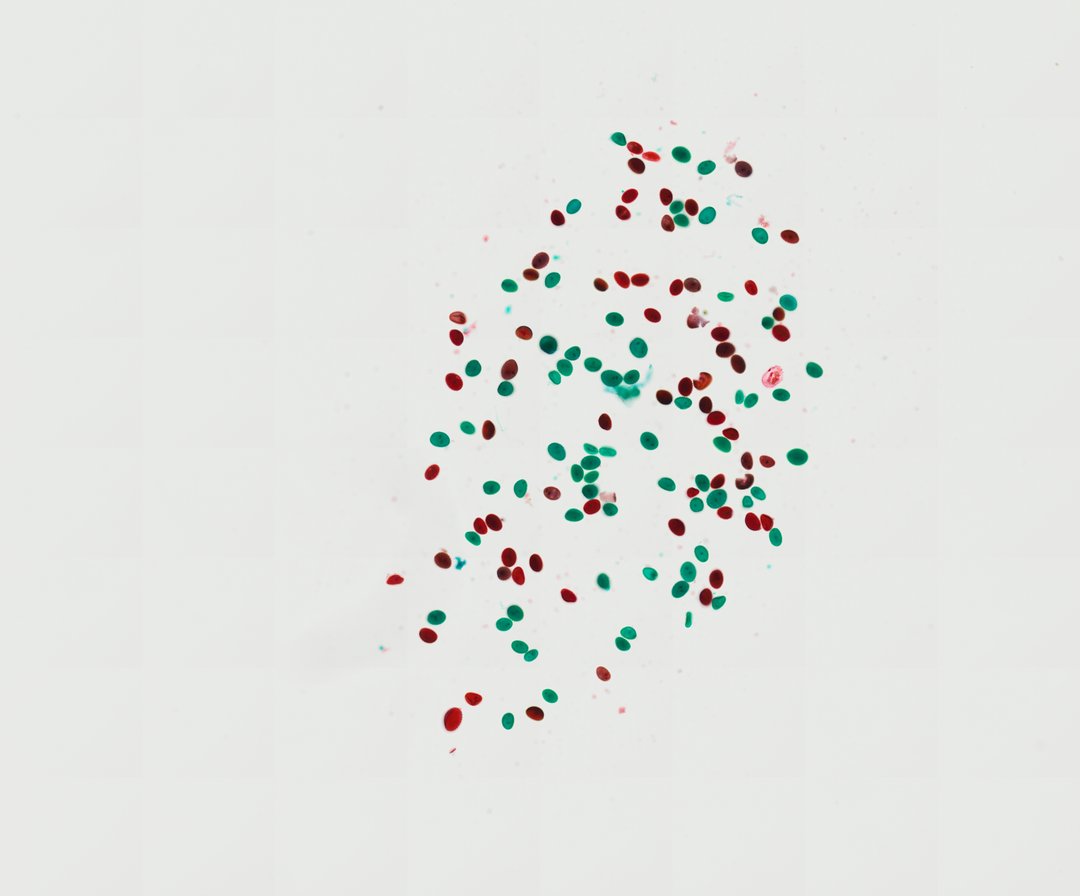
This slide shows mature lily pollen grains stained with safranin and fast green. Lily pollen is large for pollen, which makes it a good first look at the male part of the flowering plant life cycle.
This whole mount shows pollen grains from a lily (Lilium), stained with Safranin and Fast Green. The grains are large ovals, and the stains color some of them red and others green. Each grain has a tough outer wall, the exine, with a bumpy, net-like surface that shows along the edges. Inside, one or two dark spots are often visible, which are the nuclei of the tiny male plant inside the grain. Pollen carries these cells to the flower's female parts, so it is a key step in how flowering plants make seeds.
What to look for
- Pollen grains: Oval grains scattered across the slide.
- Furrow (aperture): A single long groove along each grain, typical of monocot pollen.
- Exine: The tough outer wall, with a net-like surface pattern.
- Intine and contents: The thin inner wall and the cell contents inside the grain.
Questions and answers
What does lily pollen look like under a microscope?
Lily pollen grains are large ovals with a single long furrow. Their tough outer wall has a net-like pattern that shows up well at high magnification.
What is pollen made of?
A pollen grain is a tiny male plant (male gametophyte) inside a tough wall. The outer wall, the exine, is made of sporopollenin, one of the toughest natural materials, which protects the cells inside.
Compare it
- Category
- Botany & Plants
- Scan magnification
- 20x
- Stain
- Safranin / Fast Green
Viewing this slide in class
This is a scan of a real prepared slide, not a simulation or a drawing. On StudyScope you can pan from the whole slide down to individual structures, always in focus, and measure them in real micrometers with the calibrated ruler. Present it live and every student screen follows your view and annotations. Students join with a room code on Chromebooks, iPads, or any browser, with no accounts.