Frog Skin Cross Section Under the Microscope
Frog Skin (Cross Section), Rana temporaria
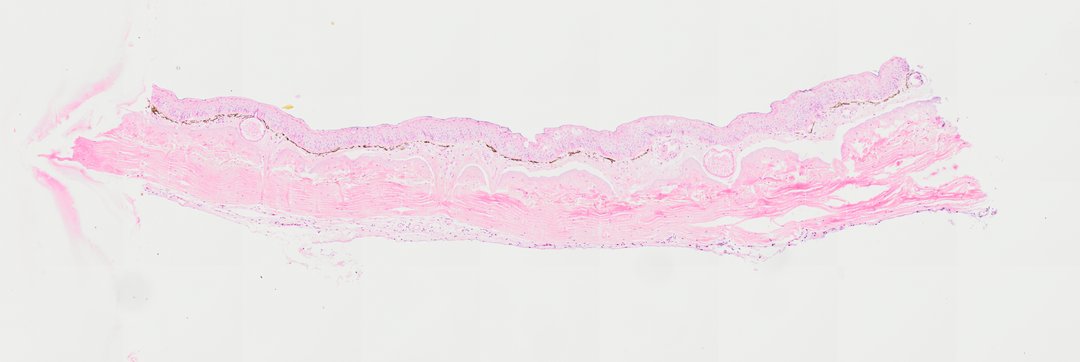
This is a cross section of frog skin stained with H&E. Frog skin is thin, moist, and full of glands, and frogs even use it to breathe, so it makes a good comparison with human skin.
This is a cross section of frog skin (Rana temporaria), stained with H&E, which colors nuclei purple and other tissue pink. The outer layer, the epidermis, is made of several rows of cells stacked on top of each other. Just under it is a thin line of dark brown pigment cells, which give the frog its color. Below that is the dermis, a thick layer of pink fibers that makes the skin strong. A few round skin glands sit in the dermis. They make mucus that keeps the skin moist, which helps the frog take in oxygen through its skin.
What to look for
- Epidermis: The outer layer of several rows of cells, with purple nuclei.
- Dermis: Pink connective tissue under the epidermis.
- Mucous glands: Small round glands in the dermis that keep the skin moist.
- Poison (granular) glands: Larger glands in the dermis that release protective chemicals.
- Pigment cells: Dark cells (chromatophores) near the top of the dermis that give frogs their color.
Questions and answers
What does frog skin look like under a microscope?
Frog skin has a thin epidermis of several cell layers on top of a dermis full of round glands. Some glands make mucus to keep the skin moist, and others make chemicals that protect the frog. Dark pigment cells give the skin its color.
Why is frog skin always moist?
Mucous glands keep frog skin wet. Frogs take in some of their oxygen through their skin, and gases pass through a moist surface much more easily.
Compare it
- Category
- Vertebrates
- Scan magnification
- 20x
- Stain
- H&E
Viewing this slide in class
This is a scan of a real prepared slide, not a simulation or a drawing. On StudyScope you can pan from the whole slide down to individual structures, always in focus, and measure them in real micrometers with the calibrated ruler. Present it live and every student screen follows your view and annotations. Students join with a room code on Chromebooks, iPads, or any browser, with no accounts.