Chicken Blood Smear Under the Microscope
Chicken Blood Smear, Gallus gallus domesticus
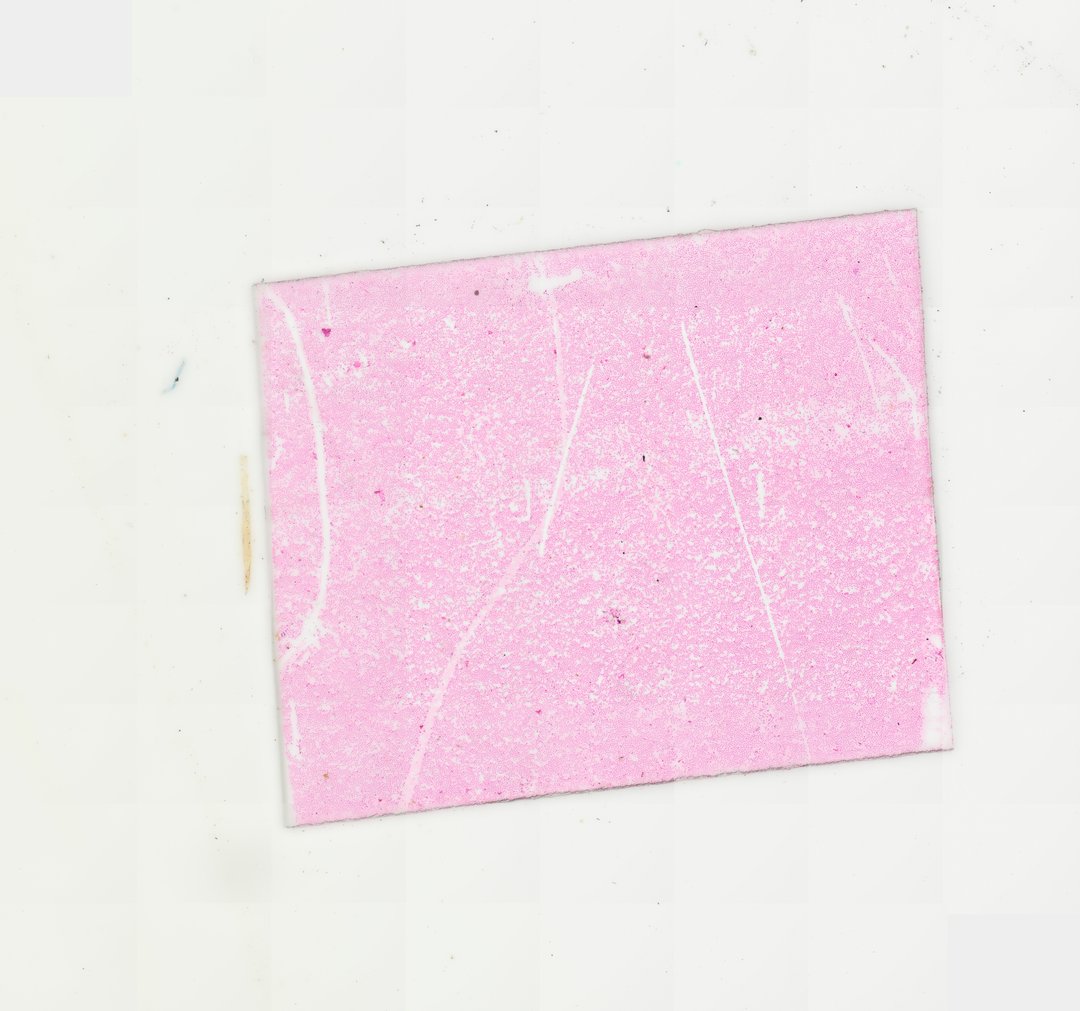
This is a smear of chicken blood stained with Wright-Giemsa. Classes use it to compare bird blood with human blood, since bird red blood cells are oval and keep their nucleus.
This blood smear from a domestic chicken (Gallus gallus domesticus) is stained with Wright-Giemsa. Most of the cells are red blood cells, which are oval and each have a dark purple nucleus in the center. This is a key difference from human red blood cells, which are round and have no nucleus. A few white blood cells, which fight infection, and small thrombocytes, which help blood clot, are scattered among them. Comparing this slide with a human blood smear shows how blood differs between birds and mammals.
What to look for
- Red blood cells: Oval cells with pale pink to orange cytoplasm and a dark purple oval nucleus in the center.
- Heterophils: White blood cells with rod-shaped granules in their cytoplasm, the bird version of neutrophils.
- Lymphocytes: Round white blood cells with a large dark nucleus and a thin rim of blue cytoplasm.
- Thrombocytes: Small oval cells with a nucleus that help blood clot, taking the role of platelets.
Questions and answers
Do chicken red blood cells have a nucleus?
Yes. Chicken and other bird red blood cells are oval and keep their nucleus, which shows as a dark purple oval in the middle of each cell. Mammal red blood cells, including human ones, lose their nucleus as they mature.
How is chicken blood different from human blood under a microscope?
Chicken red blood cells are oval and nucleated, while human red blood cells are round, have no nucleus, and have a pale center. Chickens also have nucleated thrombocytes instead of platelets, and heterophils instead of neutrophils.
Compare it
- Category
- Vertebrates
- Scan magnification
- 20x
- Stain
- Wright-Giemsa
Viewing this slide in class
This is a scan of a real prepared slide, not a simulation or a drawing. On StudyScope you can pan from the whole slide down to individual structures, always in focus, and measure them in real micrometers with the calibrated ruler. Present it live and every student screen follows your view and annotations. Students join with a room code on Chromebooks, iPads, or any browser, with no accounts.