Nostoc commune (Whole Mount)
Nostoc commune
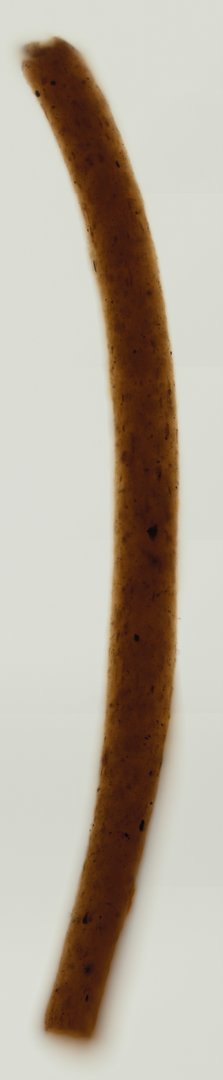
Nostoc commune is a colonial terrestrial cyanobacterium capable of surviving extreme environmental conditions through desiccation tolerance and nitrogen fixation. Under light microscopy, a whole mount specimen reveals an extensive extracellular gelatinous matrix composed of complex mucopolysaccharides that enclose entangled uniseriate filaments, or trichomes. Individual vegetative cells within the trichomes are spherical to barrel-shaped, arranged in characteristic bead-like chains or filaments. Specialized enlarged, thick-walled cells known as heterocysts are differentiated at intervals along the trichomes, providing an anoxic microenvironment essential for the activity of the nitrogenase enzyme complex responsible for atmospheric nitrogen fixation. Additionally, thick-walled resting cells called akinetes may form to ensure survival during prolonged desiccation. The brownish-gelatinous macroscopic structure protects the embedded bacterial colonies from mechanical stress, solar radiation, and dehydration.
- Category
- Microbiology
- Magnification
- 20x
- Tags
- Nostoc commune, cyanobacteria, Nostoc filament, heterocyst, gelatinous sheath, nitrogen fixation, trichome, vegetative cell, akinete, mucilaginous matrix, blue-green algae, colony formation, prokaryote, microbiology, whole mount, brightfield microscopy, microbial ecology, desiccation tolerance
Explore this slide with deep zoom, save it to your library, and present it live to students on StudyScope. Create a teacher account or browse the full catalog.