Zea Root Tip (Longitudinal Section)
Zea mays
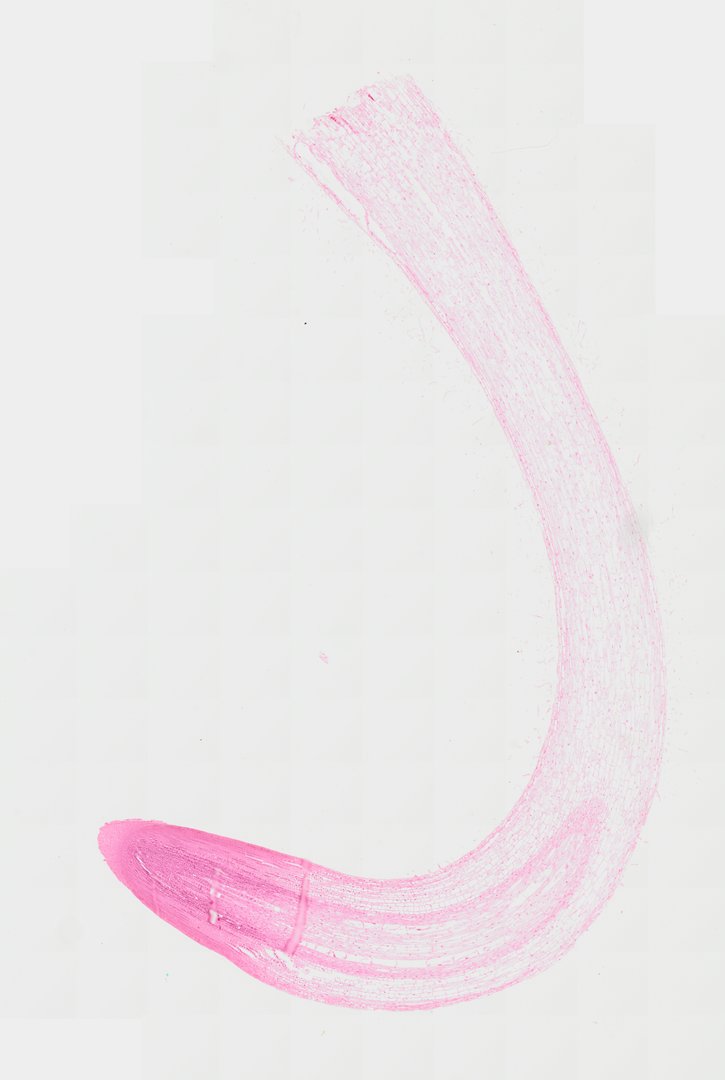
This longitudinal section of a maize (Zea mays) root apex provides a classic view of monocot root apical development and primary tissue organization. At the distal terminal apex lies a protective root cap (calyptra) composed of parenchyma cells that shield the delicate apical meristem from mechanical abrasion as the root navigates through the soil substrate. Immediately proximal to the root cap is the apical meristem, characterized by dense clusters of actively dividing, thin-walled meristematic cells exhibiting condensed chromatin and mitotic figures. Further proximal along the longitudinal axis, the section transitions into the zone of elongation and zone of maturation, where cell expansion drives linear growth and primary tissues begin differentiating into the central vascular cylinder, surrounding cortex, and outer protoderm/epidermal layer.
- Category
- Botany & Plants
- Magnification
- 20x
- Stain
- Safranin
- Tags
- Zea mays root tip, Zea mays, maize root tip, corn root apex, root tip longitudinal section, root apical meristem, root cap, calyptra, mitosis, zone of cell division, zone of elongation, monocot root, protoderm, ground meristem, procambium, vascular differentiation, plant cell wall, plant histology, botanical histology, meristematic cells
Explore this slide with deep zoom, save it to your library, and present it live to students on StudyScope. Create a teacher account or browse the full catalog.