Pittosporum tobira Leaf (Cross Section)
Pittosporum tobira
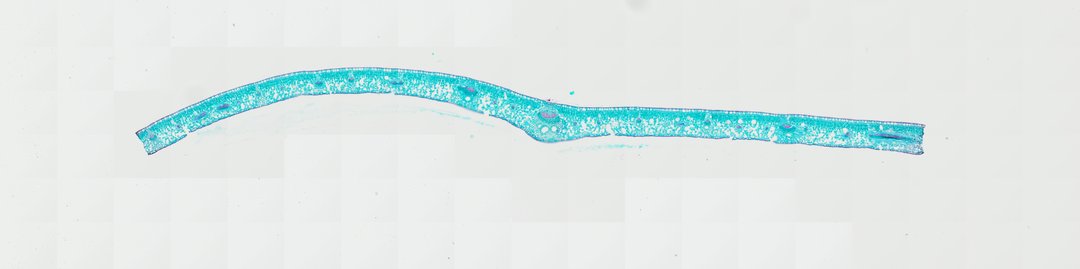
A cross section of a Japanese cheesewood leaf (Pittosporum tobira C.S.) double-stained with Safranin and Fast Green, highlighting xeromorphic structural modifications characteristic of leathery evergreen broadleaf foliage. A thick, protective waxy cuticle coats a well-developed, multiple-layered adaxial epidermis, minimizing transpiration loss. Beneath the upper hypodermis, densely packed columns of palisade mesophyll cells rich in chloroplasts form a multi-layered palisade zone above an extensive, loosely arranged spongy mesophyll layer traversed by intercellular air spaces. Prominent secretory canals (resin ducts) lined by epithelial cells are embedded within the mesophyll adjacent to vascular bundles. The midrib encloses a central collateral vascular bundle containing lignified xylem elements facing the adaxial surface and phloem tissue facing the abaxial side, braced by supporting parenchymatous and collenchymatous tissues.
- Category
- Botany & Plants
- Magnification
- 20x
- Stain
- Safranin / Fast Green
- Tags
- Pittosporum tobira leaf cross section, Pittosporum tobira, Japanese cheesewood, pittosporum leaf, leaf cross section, xeromorphic leaf, multiple epidermis, thick cuticle, palisade mesophyll, spongy mesophyll, secretory canal, resin duct, vascular bundle, xylem, phloem, dicot leaf anatomy, plant histology
Explore this slide with deep zoom, save it to your library, and present it live to students on StudyScope. Create a teacher account or browse the full catalog.